
Hydrogen sulfide is one of those hazards that workers talk about often, yet the details can get fuzzy. Some folks hear stories from coworkers. Others pick up bits of information at safety meetings. Before long, half-truths start to feel like facts. That can put people at risk, especially in fields where H₂S exposure is a real possibility.
This guide walks through some of the most common misconceptions we see about H₂S training and the yearly recertification that goes with it. If you are searching for answers before signing up for a course, this should help you sort out what is real and what is noise.
8 Myths About H2S Training
Myth 1: Online H₂S training is not accepted by employers

Most employers accept online H₂S awareness training as long as it follows OSHA-related guidelines and provides proper certification documentation.
This one pops up often. Many workers worry that online training will not hold up on the job. In most industries that deal with H₂S, employers accept online H₂S awareness courses as long as the program follows OSHA related requirements and teaches the essential topics. Workers receive a certificate and a wallet card, which is usually what supervisors ask for.
The only time issues arise is when a job site requires extra, hands-on instruction for respirators, gas detection equipment, or rescue practice. Those needs vary based on the employer and the conditions of the site. Awareness training gets workers the knowledge they need, but physical equipment training is handled separately.
Myth 2: H₂S certification lasts forever
H₂S awareness training typically needs to be refreshed annually because safety knowledge and employer requirements change over time.
Many people assume that once they finish a course, they never need to worry about it again. H₂S awareness training is not a one-and-done credential. Most companies expect workers to refresh their training every year because the material involves hazard recognition, emergency response, and protective measures that fade with time.
Annual H2S recertification helps workers stay sharp, and it also shows employers that a worker is keeping up with current practices. A certificate from three or four years ago does not tell a supervisor much about someone’s present readiness.
Myth 3: You can always smell H₂S before it is dangerous

At higher concentrations, hydrogen sulfide can disable your sense of smell, making odor an unreliable warning sign.
This is one of the most dangerous beliefs out there. H₂S is known for its rotten egg odor, but relying on smell is extremely risky. At higher concentrations, the gas shuts down a person’s sense of smell completely. Workers often believe the air is safe simply because they cannot detect the odor. In reality, they might already be in a hazardous situation.
This is why training covers gas monitoring, alarms, and emergency procedures. Those tools protect people far better than the human nose ever could.
Myth 4: Only oil and gas workers need H₂S training
H₂S exposure risks exist in many industries, including wastewater, mining, manufacturing, and confined space work.
Oilfields deal with H₂S often, but they are far from the only locations where workers face this hazard. H₂S shows up in wastewater treatment plants, sewer work, mining operations, food processing facilities, landfills, manure pits, and chemical production sites. Confined spaces in many industries can trap pockets of gas that have nothing to do with oil or gas extraction.
If a job involves enclosed spaces, decaying organic matter, or pressurized systems, training becomes important even if the workplace is not a drilling site.
Myth 5: If I took H₂S training years ago, I still remember everything I need

Without regular refreshers, critical H₂S safety knowledge fades and can slow reaction time during emergencies.
Anyone who has dealt with emergencies knows that memory fades without practice. When people panic, they fall back on their most recent training. Workers who have not reviewed H₂S information in several years often forget exposure symptoms, alarm responses, or evacuation steps.
This is one reason recertification exists. It is not about repeating information simply to check a box. It is about reinforcing the habits that help workers make clear decisions under stress.
Myth 6: A quick toolbox talk is enough preparation
Toolbox talks support safety awareness but do not replace structured H₂S training that covers detection, response, and protective measures.
Toolbox talks are helpful for raising awareness, but they do not replace a structured training course. Awareness training covers gas behavior, exposure limits, monitoring devices, protective equipment, and emergency actions in a way that short briefings cannot. Toolbox talks work best as reminders after workers already have proper education in place.
Myth 7: H₂S incidents are rare, so training is not urgent
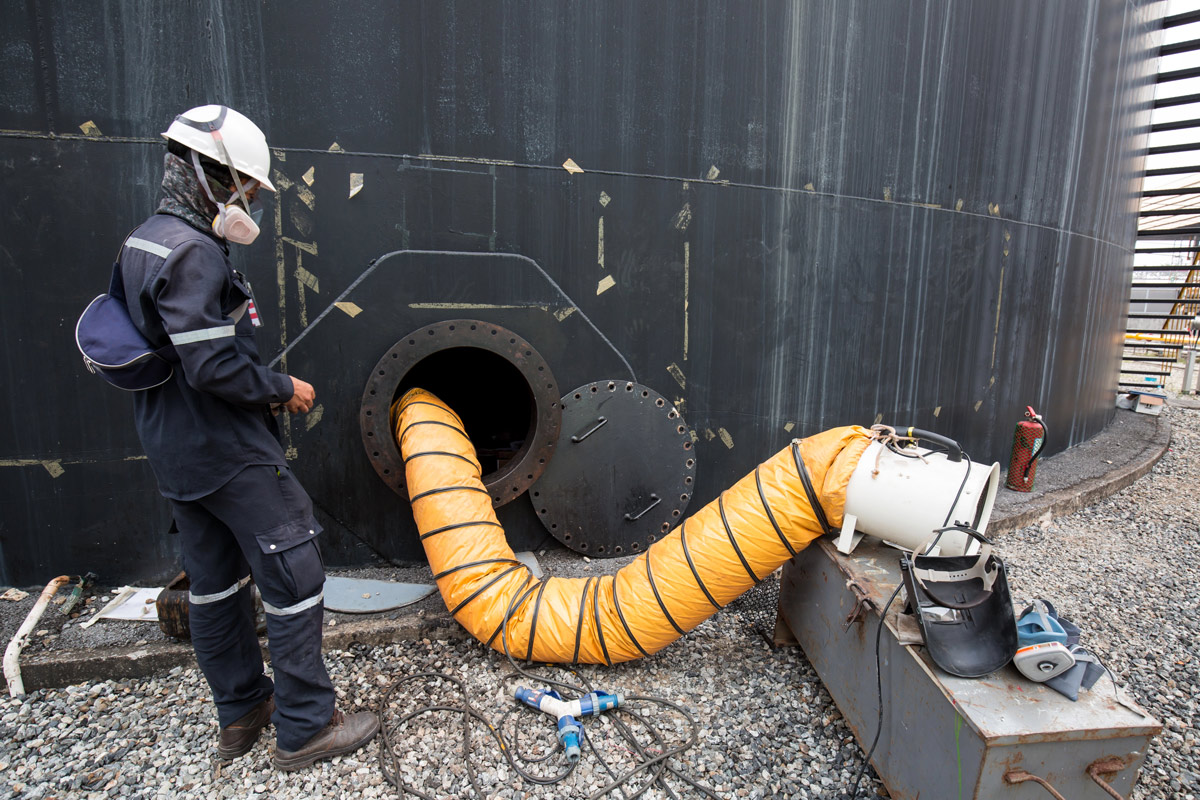
H₂S incidents are unpredictable, and even brief exposure can cause serious injury or loss of consciousness.
Some workers underestimate the risk because they have never experienced an incident personally. H₂S is unpredictable, and it only takes one release to place someone in danger. Even a small concentration spike can cause confusion, respiratory distress, or unconsciousness. Workers in high-risk jobs often say the same thing after an incident. They did not think it would happen that day.
Training helps create habits that support quick action. In high-hazard environments, speed matters.
Myth 8: All H₂S courses are basically the same
H₂S courses vary in depth and quality, and not all programs cover the full range of hazards and response procedures employers expect.
Courses vary more than people realize. Some skip topics that employers consider vital or fail to align with OSHA related expectations. Others provide limited information about emergency response. Workers benefit most from programs that cover gas characteristics, exposure symptoms, engineering controls, protective gear, rescue procedures, and monitoring equipment.
Choosing a course that provides a certificate plus a wallet card also helps with documentation on job sites.
What proper H₂S training should cover
If you want to feel confident about your training, make sure the program teaches the following:
- How H₂S forms and behaves in different environments
- Exposure symptoms and health effects
- Common work locations where H₂S appears
- Monitoring methods and alarm responses
- Protective equipment and respiratory basics
- Safe work practices
- Emergency evacuation steps
A good refresher course will review these same topics and update workers on any changes or new recommendations.
Do you need hydrogen sulfide training or recertification?

H₂S training is not just another requirement on a checklist. It is a layer of protection for workers who may not realize how fast conditions can change. Clearing up myths helps people make informed decisions about their safety and their certification needs.
If you are new to the topic, an initial H₂S Awareness course will give you the grounding you need. If your certificate is approaching the one year mark, a recertification course keeps your skills fresh and your documentation current.
Whenever you are ready for either course, OSHA Pros can guide you through the process in a straightforward way so you can get back to work with confidence.
More Information on H2S Training & Recertification Courses
Multi-course discounted pricing: Discounts automatically applied when you purchase courses for 5 or more students.